Create alarm type
Alarms↑ can be generated manually and cropped to suit your specific needs. Proceed as follows:
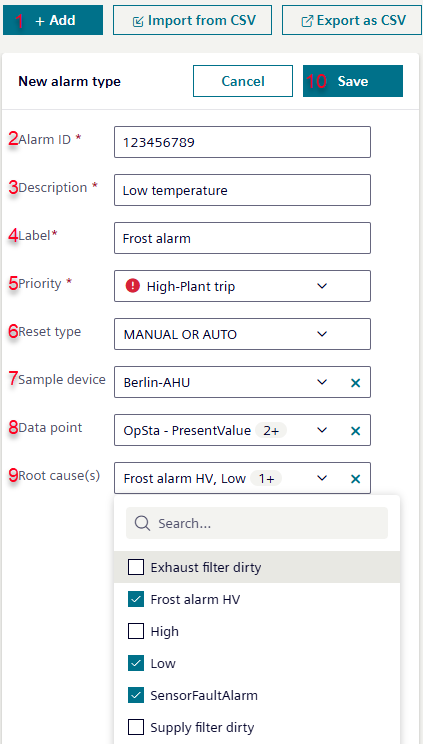
- A standardized text template for alarm types is also available.
- Go to 'Alarm Dashboard > Configuration >Alarm types'.
- Select ‘+ Add‘ (1).
- The Alarm type dialog box opens.
- In the Alarm ID field, enter the ID number of the corresponding alarm (2).
- A corresponding alarm must be triggered on the device (e.g. supply air fan fault) in order to enter an Alarm ID.
Info: A new alarm type is created the first time an alarm is triggered; Climatix IC fills out the type using available information. Automatically generated alarm types must be modified. - Alarm ID is always the same within an application type (e.g.: AHU1) and does not need to be regenerated each time.
Info: Alarm ID is, however, generated on the same functions (e.g. supply air fan fault) but for a different application type (e.g. AHU2). - In the 'Description' field (3), enter a description for the alarm. This description is issued as the alarm text.
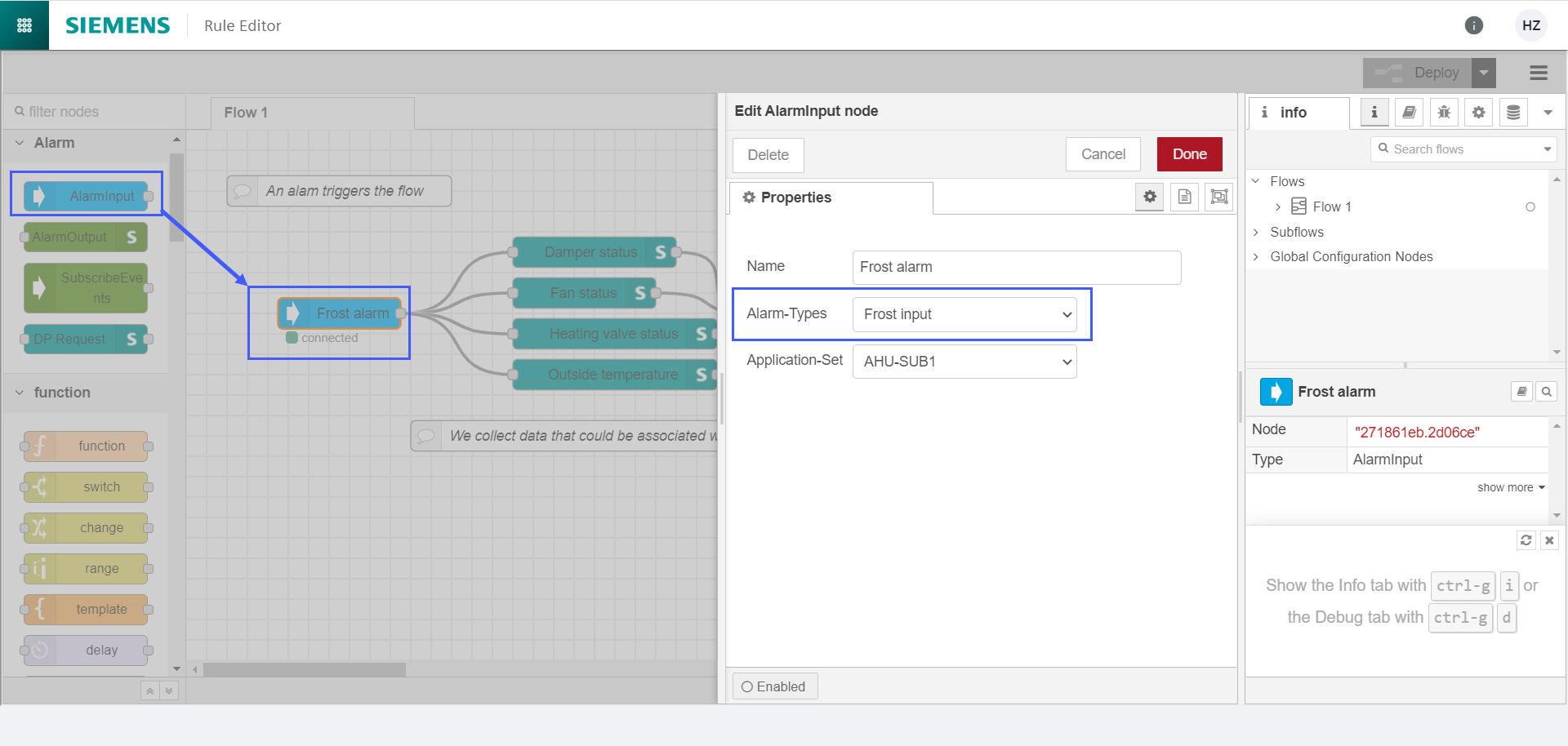
- In the 'Label' field (4), enter a label name for the alarm. The designation is used in the Rule Editor when configuring the 'Alarm Types' property for the alarm input node (see 'Rule Editor menu').
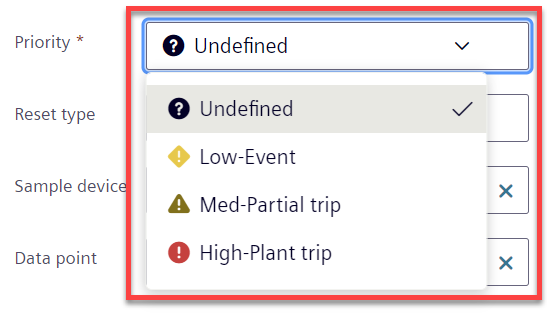
- Set the severity of the alarm in the 'Priority' field (5).
- Select the desired priority level from the drop-down list:
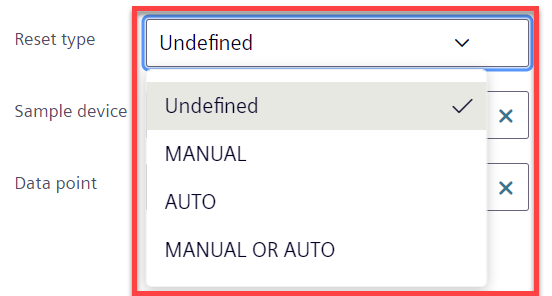
- Set the mode of reset for the alarm in the 'Reset type' field (6).
- Select the desired reset type from the drop-down list:
- In the 'Sample device' field (7), select the plant that serves as an example for the new alarm type.
- In the 'Data points' field (8), select the data point from the previously selected plant to use as a template for the new alarm type.
- Select multiple data points as needed.
- Up to six data points can be selected at the same time.
- The selected data points are displayed as data point values and as a chart for the plants that display this alarm type (please refer to the chapters 'Details', 'Chart'.
- Select the root cause in the 'Root causes'.
- Select multiple data root causes as needed.
- For root causes: See 'Causes'.
- Note: Root causes defined for an alarm type in the Rule Editor or Scripting Editor take precedence over causes defined for an alarm in the Alarm Dashboard.
- Select ‘Save‘ (10).
- The alarm type is saved and can be used in Rule Editor.